
DODO AQUA SAL
Inductive Salinity Sensor
Salinity · Temperature
- 0-70 PSU, 0.1 PSU resolution
- Inductive - no contacting electrodes
- ±1.5 % F.S.
- RS-485 Modbus-RTU
- IP68, 3/4" NPT immersion
- 5 m cable, GX12 fitted
Works with DODO LOGGER, the DODOTiK Platform and the DODOLINK app — see how.
Overview
DODO AQUA SAL (DOT-SAS-200) measures salinity from fresh water to well past seawater - 0 to 70 PSU - with temperature, over RS-485 Modbus-RTU.
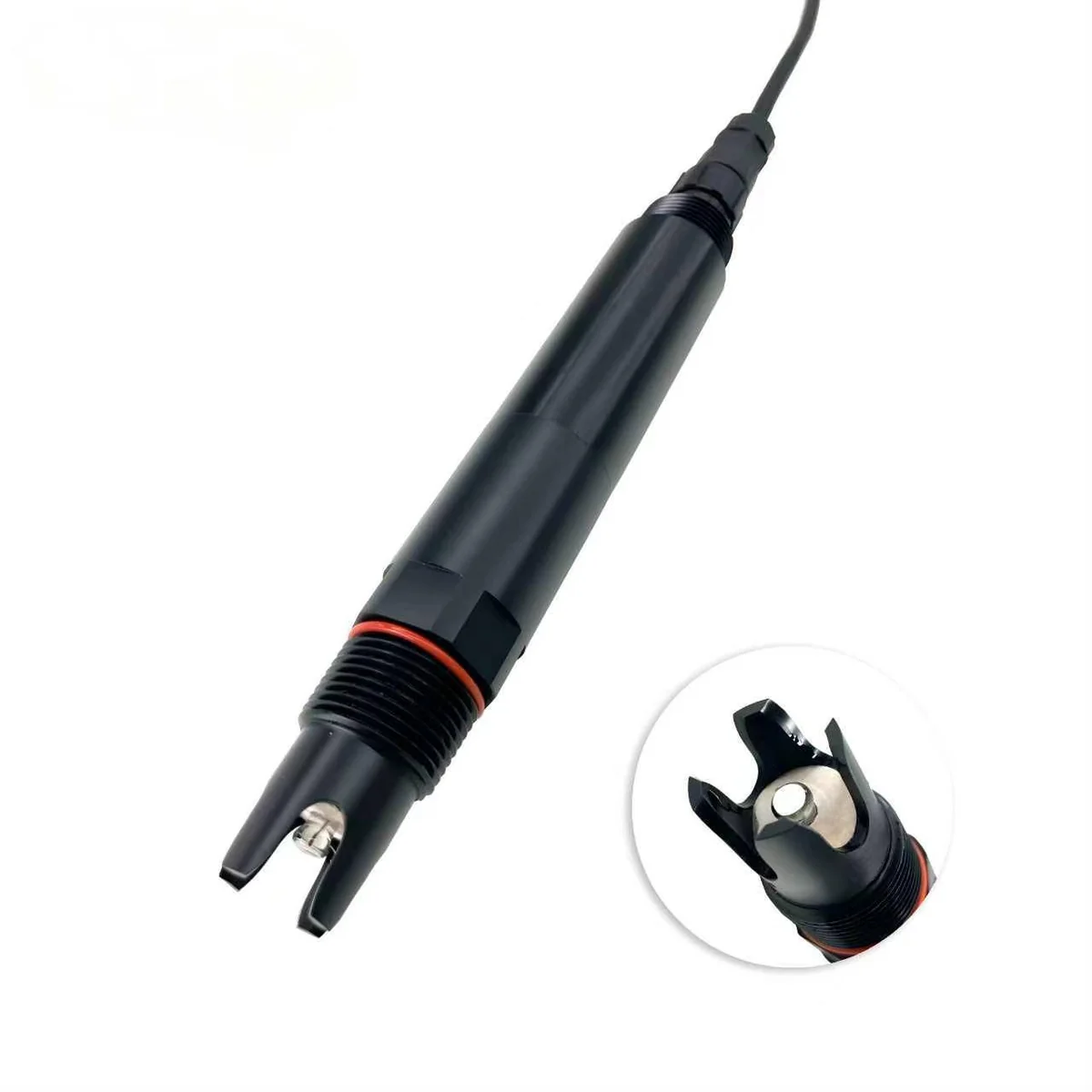
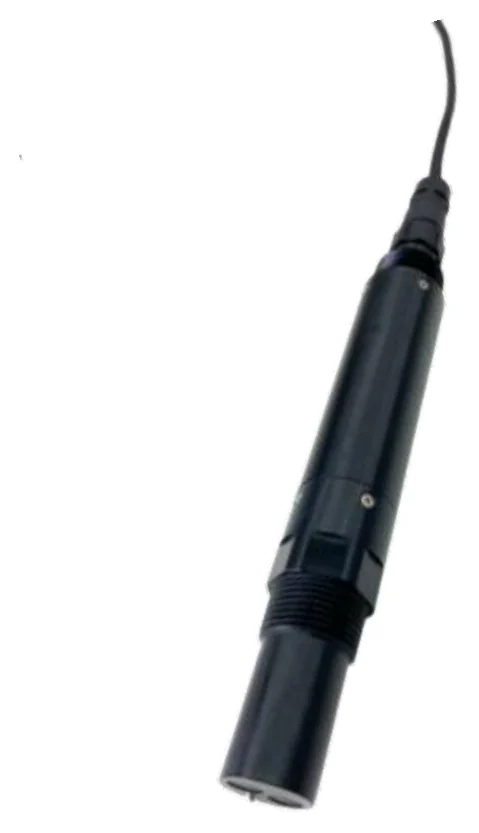
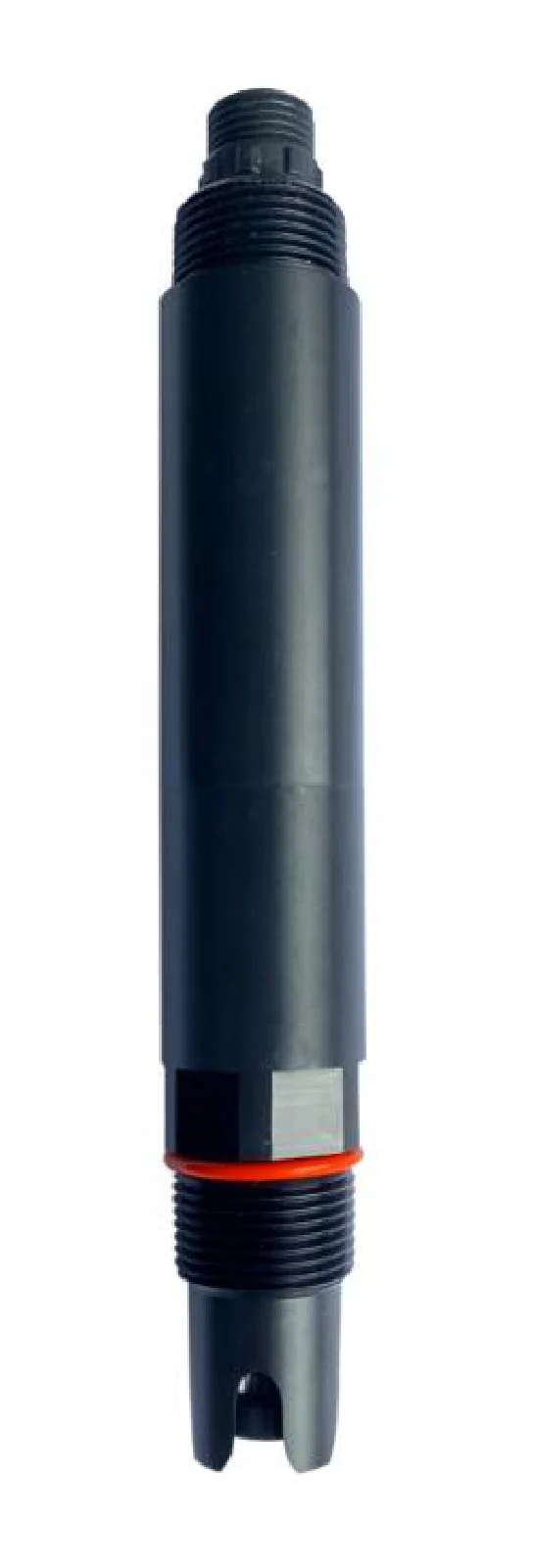
What separates it from a conductivity probe pressed into salinity service is the electrode. This is an inductive (electrodeless, toroidal) cell: two coils sealed inside a plastic body, coupled only through a loop of the water itself. Nothing metallic touches the medium.
That is the whole argument for the sensor. The failure mode of a contacting cell in saline or dirty water is fouling - a film across the electrodes changes the cell constant and the reading walks away from truth between cleans. An inductive cell has no electrodes to foul. The factory's own maintenance instruction is that these cells are basically maintenance-free, and contamination or mild scaling of the casing does not affect normal operation - and that cleaning them with sandpaper is acceptable. That is not a claim a contacting probe can make.
The practical consequence is service interval. In seawater intakes, brine streams, aquaculture and wastewater - the places salinity actually gets measured - this is the difference between a monthly clean and an annual look.
Key features
- Inductive cell - no contacting electrodes, so nothing to foul or polarise
- Full brackish-to-brine span - 0-70 PSU at 0.1 PSU resolution
- Fouling-tolerant - a film or mild scale on the casing does not shift the reading
- Robust cleaning - a soft brush or even sandpaper on the casing is acceptable
- Compensated - automatic temperature compensation via Pt1000, ±0.5 °C
- Submersible - IP68, 3/4" NPT thread, < 0.6 MPa working pressure
- Low power - < 0.2 W at 12 V
- Plug-in - 5 m cable with the DODO LOGGER GX12 connector fitted as standard
Measured parameters
| Parameter | Unit | Range | Accuracy | Resolution |
|---|---|---|---|---|
| Salinity | PSU | 0-70 PSU | ±1.5 % F.S. | 0.1 PSU |
| Temperature | °C | 0-65 °C | ±0.5 °C | 0.1 °C |
Technical specifications
Measurement
| Parameter | Value |
|---|---|
| Measured parameters | Salinity and temperature |
| Measuring range | 0-70 PSU |
| Resolution | 0.1 PSU |
| Accuracy | ±1.5 % F.S.; temperature ±0.5 °C |
| Measuring principle | Inductive (electrodeless, toroidal) cell |
| Temperature compensation | Automatic (Pt1000) |
| Calibration | Two-point - zero in air, slope in a standard solution |
Electrical
| Parameter | Value |
|---|---|
| Supply voltage | DC 12-24 V |
| Power consumption | < 0.2 W @ 12 V |
| Output | RS-485, Modbus-RTU |
| Baud rate | 9600 (default) |
| Frame format | 8 data bits, 1 stop bit, no parity (8N1) |
| Default slave address | 6 |
| Addressing | Field-changeable over the bus, range 1-127 |
| Cable | 5 m, Φ6 mm shielded, corrosion-resistant jacket, GX12 4-pin female fitted; other lengths on request |
Mechanical & environmental
| Parameter | Value |
|---|---|
| Body diameter | Φ30 mm |
| Overall length | 185 mm |
| Wetted material | ABS (default) or POM |
| Mounting | Immersion, 3/4" NPT thread - tank, pipe or submerged |
| Working temperature | 0 … +65 °C |
| Working pressure | < 0.6 MPa |
| Ingress protection | IP68 |
Plug DA-SAL into DODO LOGGER and it is already on your phone
No firmware reflash, no driver to write, no backend deployment. The logger self-describes its schema to the platform, so a new sensor appears in the dashboard and in the app on its own.
1 · Plug in
The fitted GX12 4-pin connector screws onto the logger's Modbus RS-485 socket. No stripping, no terminal block, no tools. Up to four sensors per logger.
2 · Select it
DA-SAL is in the logger's no-code sensor library. Pick it in the web interface, assign a slot, and it starts logging.
3 · Logged locally
Every reading to microSD, always on, offline included. CSV download straight off the card.
4 · Live in the cloud
MQTT/TLS to the DODOTiK Platform — live dashboards, full history, alert thresholds, device management.
5 · On a phone
The same readings and alerts in DODOLINK for iOS and Android, for whoever is out in the field rather than at a desk.
Nothing here is lock-in. DA-SAL is a standard Modbus-RTU device on a standard RS-485 bus. The DODO LOGGER, the platform and the app are the fastest route from probe to dashboard, not the only one — the full register map is published below and in the datasheet, and the sensor can be ordered with bare leads for a PLC, DCS, SCADA or paperless recorder.
Dimensions
| Dimension | Value |
|---|---|
| Overall length | 185 mm |
| Body diameter | Φ30 mm |
| Sensing head diameter | Φ22 mm |
| Process thread | 3/4" NPT, both ends |
| Cable length | 5 m (standard) |
Wiring — GX12 4-pin connector
The cable is terminated in a GX12 4-pin female aviation connector, fitted as standard. It screws directly onto the DODO LOGGER Modbus RS-485 socket. For a third-party logger or a terminal block, order the bare-lead variant rather than cutting the connector off at the sensor's gland — the gland is part of the IP68 seal.
| Pin | Signal | Function |
|---|---|---|
| 1 | VCC | Power + (DC 12-24 V) |
| 2 | GND | Ground |
| 3 | A (D+) | RS-485 A |
| 4 | B (D−) | RS-485 B |
Modbus RTU register map
RS-485 Modbus-RTU, 9600 baud, 8 data bits, 1 stop bit, no parity. Default slave address 6. Published in full so the sensor can be read by any Modbus master — PLC, DCS, SCADA or a paperless recorder.
| Register | Value | Access | Notes |
|---|---|---|---|
| 0x0000 | Measured value + temperature | Read | 4 registers: salinity, decimals, temperature, temperature decimals |
| 0x1000 | Zero calibration | Write | In air; write 0 |
| 0x1004 | Slope calibration | Write | In a standard solution; write the standard's actual value |
| 0x1006 | Zero calibration value | Read | Returns the stored zero offset |
| 0x1008 | Slope calibration value | Read | Slope × 1000 |
| 0x1010 | Temperature calibration | Read / Write | Write actual temperature × 10; read the stored offset × 10 |
| 0x2002 | Device address | Read / Write | Default 6, range 1-127 |
| 0x2020 | Factory reset | Write | Write 0 - restores factory calibration. Recalibrate after a reset |
Calibration
Calibration is performed over the bus — there is no handheld meter to carry and no transmitter to adjust.
Two points: zero in air, slope in a standard solution.
Zero, in air. Rinse the probe with distilled water and blot it dry with filter paper. Leave it powered and standing in air for about 3 minutes; when the reading has settled, write the zero command. Residual water in the bore is the usual cause of a failed zero.
Slope, in a standard solution. Use a standard between 20 % of full scale and full scale. Stand the probe vertically with at least 2 cm of clearance from the container floor and walls, and write the slope command.
Calibration commands
| Operation | Request | Response |
|---|---|---|
| Zero, in air | 06 06 10 00 00 00 8C BD | 06 06 10 00 00 00 8C BD |
Applications
Desalination - feed, brine and reject-stream salinity
Aquaculture - marine and brackish pond and RAS salinity control
Coastal and estuarine monitoring - saline-intrusion and mixing studies
Seawater intakes - cooling-water and process-intake quality
Food processing - brine strength in curing and pickling lines
Wastewater - saline-load monitoring on industrial effluent
Ordering information
| Order code | Description |
|---|---|
| DA-SAL | DODO AQUA SAL (DOT-SAS-200), 0-70 PSU, ABS wetted parts, RS-485 Modbus-RTU, 5 m cable with GX12 4-pin female connector |
| DA-SAL-POM | As DA-SAL, POM wetted parts |
| DA-SAL-L10 | As DA-SAL, 10 m cable |
| DA-SAL-L20 | As DA-SAL, 20 m cable |
| DA-SAL-BL | As DA-SAL, bare leads instead of the GX12 connector |
What's in the box
- DODO AQUA SAL sensor with 5 m cable, GX12 4-pin female connector fitted
- Test certificate
- Calibration solution (optional, specify at order)
Quality and warranty
- IP68 sealed body, ABS or POM wetted parts
- No contacting electrodes - nothing in the measurement path wears out
- 72-hour burn-in and stability test on every unit before shipment
- Warranty: 1 year from date of sale, excluding damage from improper use
Handling and maintenance
- Essentially maintenance-free. Contamination or mild scaling of the casing does not affect normal operation - this is the point of an inductive cell.
- When cleaning is needed, use a soft brush or sandpaper to take the deposit off, rinse with distilled water, then recalibrate.
- Because these cells routinely work in fouling service, firm pressure is acceptable during cleaning. Lightly scratching the casing does not affect operation - but do not penetrate it. A breached casing ends the sensor.
- Keep the bore clear. A blocked bore reads whatever is blocking it.
Frequently asked questions
Does DODO AQUA SAL work with a PLC, SCADA or a third-party data logger?
Yes. DA-SAL is a standard RS-485 Modbus-RTU device at 9600 baud, 8N1, so any Modbus master can read it - PLC, DCS, SCADA or a paperless recorder. The full register map is published in the datasheet, and the sensor can be ordered with bare leads instead of the GX12 connector for terminal-block wiring. There is no proprietary driver and no lock-in.
What is the default Modbus address of DA-SAL?
6. The address is changeable in the field over the bus, so several sensors can share one RS-485 pair as long as each has a unique address.
How do I connect DODO AQUA SAL to DODO LOGGER?
Screw the fitted GX12 4-pin connector onto the logger's Modbus RS-485 socket - no stripping, no terminal block, no tools. DA-SAL is in the logger's no-code sensor library, so an installer selects it in the web interface and it begins logging to microSD and publishing to the DODOTiK Platform and the DODOLINK app. No firmware reflash, no backend change.
What does DA-SAL measure, and how accurately?
Salinity: 0-70 PSU, accuracy ±1.5 % F.S.; Temperature: 0-65 °C, accuracy ±0.5 °C.
How do I order DA-SAL, and what does it cost?
DA-SAL is sold direct and through distributors. Pricing depends on configuration and quantity, so request a quote with the order code and the quantity you need and DODOTiK will come back with export pricing and volume tiers. Available configurations: DA-SAL; DA-SAL-POM; DA-SAL-L10; DA-SAL-L20; DA-SAL-BL.
More from DODO AQUA

Request a quote for DA-SAL
Sold direct and through distributors. Tell us the order code, the quantity and the destination country and we will come back with export pricing, volume tiers and lead time.